

New study reviews 25 years of research to map the intellectual trajectory of human-machine communication
August 11, 2026

UFCJC alumni receive one second place and three finalist honors at 2025-26 Hearst Journalism Awards National Championship
June 5, 2026

Eugy Han and Kun Xu present keynote speeches at Meaningful XR 2026 Conference
June 4, 2026

Two UFCJC Advertising faculty win 2026 AEJMC Top Webtoon Research Paper
May 27, 2026

How does AI sycophancy affect user trust?
Most people expect artificial intelligence to be smart. Fewer expect it to flatter them. Yet increasingly, AI systems are designed to sound agreeable, supportive, and emotionally aligned with users.

The benefits and drawbacks of human-robot companionship
For decades, robotic companions have been a staple of pop culture, with movies and shows like Star Wars, Futurama, The Iron Giant and Her depicting a future where humans and robots coexist, form bonds and even strike up romantic relationships. What once seemed like science fiction may now be coming to fruition thanks to recent developments in artificial intelligence, but what would human-robot relationships look like in real life?

Generative AI may help turn consumers into active collaborators and creators, study finds
In the advertising world, generative AI is transforming the way brands connect with consumers, turning audiences from passive viewers into active creators who can shape and personalize campaign content.
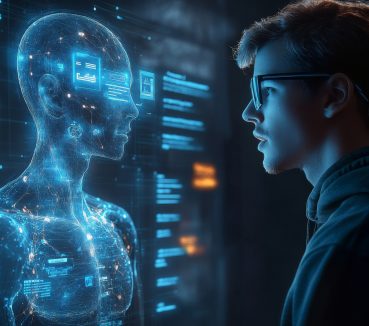
Can AI Speak Our Language: Exploring Human-Machine Communication
As AI continues to play an increasing role in both personal and professional spheres, the need to understand not just the outputs of these technologies, but also the processes behind them, becomes ever more critical. New research merges two growing fields — explainable AI (XAI) and human-machine communication (HMC) — to address how we can begin to bridge the divide between AI’s decision-making processes and human comprehension.

“Don’t Believe Everything You Read Online”: How AI Fact-Checking Could Challenge Political Bias in Science Information Processing
As social media has grown into many people’s primary news source, so has its potential for misinformation. Facebook and X have both launched fact-checking tools to combat so-called fake news. Yet many users dismiss the fact-check itself as false, especially when it challenges their preexisting views. Could an AI fact-checker seem more objective and help change minds?

AI Automates PR, But Human Intuition Still Rules
The central purpose of public relations remains rooted in creativity that artificial intelligence cannot replace. AI can help automate and streamline repetitive tasks, but it can't build relationships, craft compelling, authentic narratives and create events that engage target audiences, according to new research.

People Hate Stories They Think Were Written by AI. Even if People Wrote Them
Stories written by the latest version of ChatGPT were nearly as good as those written by human authors, according to new research on AI's narrative skills. But when people were told a story was written by AI — whether the true author was an algorithm or a person — they rated the story poorly, a sign that people distrust and dislike AI-generated art.

Can AI-Generated News Help Reverse the Declining Level of Trust in News?
Researchers pondered whether credibility and trust in news are sacrificed when articles are AI-generated and if public nonprofit perception could benefit from exposure to that content. Their conclusions: the higher the exposure and use of AI-generated news, the higher the credibility.

Look Who’s Talking: Celebrity Causes vs. AI-Powered Advocacy
Is a celebrity's endorsement truly helpful for a given cause? It depends on how authentic they seem. Despite the rise of AI-powered influencers, people still tend to trust their fellow humans, even if their motives are partly driven by profit.
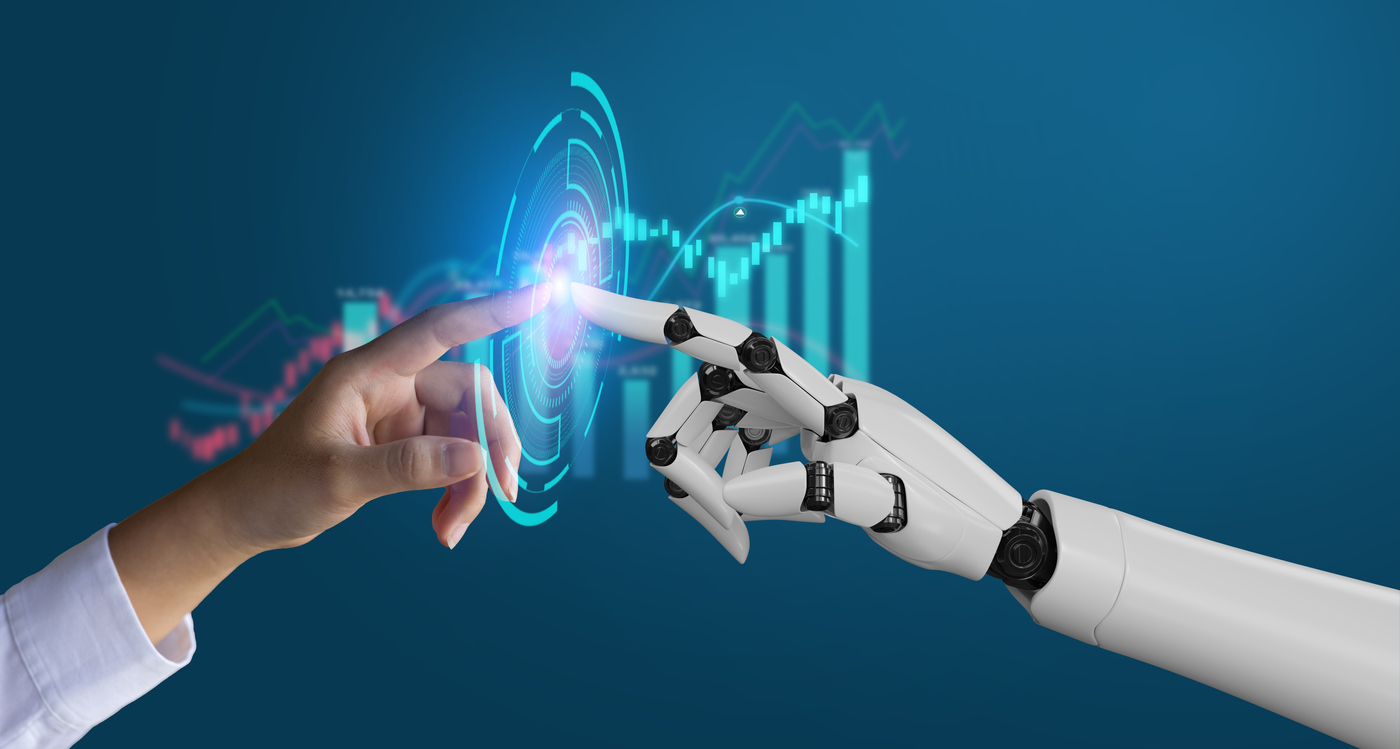
Decoding the Digital Dialogue: A Two-Step Framework for Human-AI Interaction
In an era where artificial intelligence is becoming increasingly ubiquitous, the line between human and machine communication is blurring faster than ever. New research offers a fresh perspective on how we interact with and understand artificial intelligence. This innovative approach aims to bridge the gap between two emerging fields: explainable AI and human-machine communication.

Pixels vs. People: The Battle for Consumer Trust in Influencer Marketing
New research examines the effectiveness of virtual influencers compared to humans in affecting brand attitudes and purchase intentions and found that, while virtual influencers are not yet ready to replace human influencers, they are carving out their own niche.

You, We and I, Robot: How Social Cognitive Theory Explains How Humans Learn from Machines
New research investigates whether humans can learn from machines as AI becomes increasingly sophisticated. Participants proved significantly more likely to imitate the robot’s choices when it demonstrated positive outcomes or no outcome information, compared to negative scenarios.